Indonesia
The wet-hulled wild card — earth, cedar, and tropical depth.
Indonesia is coffee's wild card. Across Sumatra, Java, Sulawesi, and Flores, smallholders practice a processing method found almost nowhere else — wet-hulling, or giling basah — which strips the parchment while the bean is still damp and produces the origin's signature cup: heavy-bodied, low-acid, and deeply savory with notes of cedar, earth, tobacco, and dark chocolate.
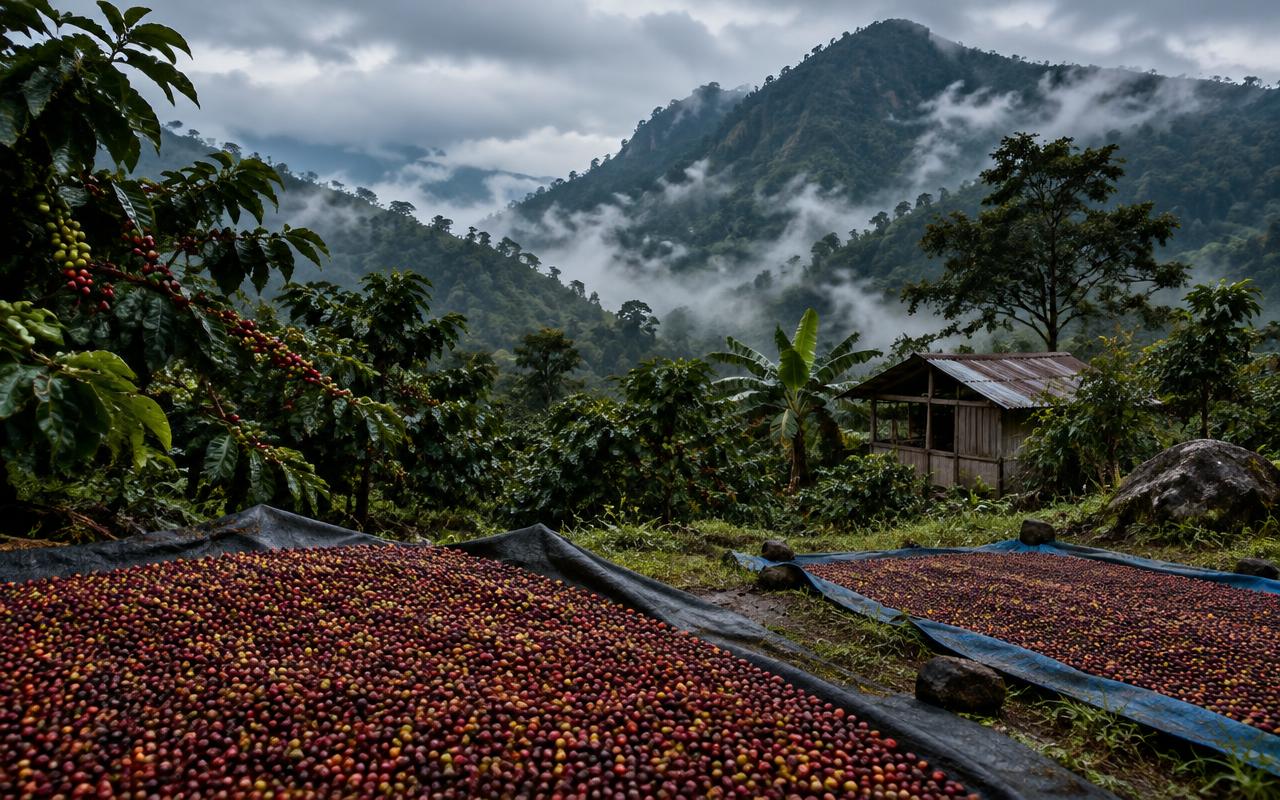
Wet-hulling evolved as a practical response to a humid climate where slow drying invites mold. Farmers sell fresh cherry to local collectors who pulp, briefly ferment, and hull the coffee at 30–40% moisture, then dry the naked green beans on tarps and patios. The process bruises and mottles the bean — and creates a flavor profile that divides the specialty world: beloved by those who want depth and body, avoided by those chasing brightness.
Sumatra's Lintong and Aceh (Gayo) regions produce the classic profile; Sulawesi's Toraja highlands offer a cleaner, more structured version; Java's historic estates — some planted under Dutch colonial rule in the 1700s — lean washed and refined. Flores and Bali are the rising specialty stories, with washed and honey lots scoring into the high 80s.
Indonesia is also the world's second-largest robusta producer, centered on Lampung. For specialty roasters, the opportunity is in traceable Arabica microlots: harvest timing varies by island, generally May through September, with Gayo's main crop peaking October through January.
Inside Indonesia
| Region | Altitude | Varietals | Processing | Harvest |
|---|---|---|---|---|
| Aceh (Gayo) | 1,200–1,800m | Tim Tim, Catimor | Wet-hulled | Oct–Jan |
| Lintong (Sumatra) | 1,200–1,500m | Sigarar Utang, Typica | Wet-hulled | Jun–Sep |
| Toraja (Sulawesi) | 1,400–1,800m | Typica | Wet-hulled, Washed | May–Sep |
| Java (Ijen) | 1,000–1,500m | Typica | Washed | Jun–Sep |
How to brew it
Wet-hulled Sumatra is built for immersion: a French press at 1:15, 94°C, 4 minutes, or a rich moka pot. The heavy body and cedar-spice depth also make it a classic component in dark-roast espresso blends.
Full brew guides →